Wooden Puzzle Bliss
Gimica GmbHPuzzle
4.69.11K Reviews
- Version
- 1.13.0
- Installs
- 1.00M
- Age Rating
- Everyone
Screenshots
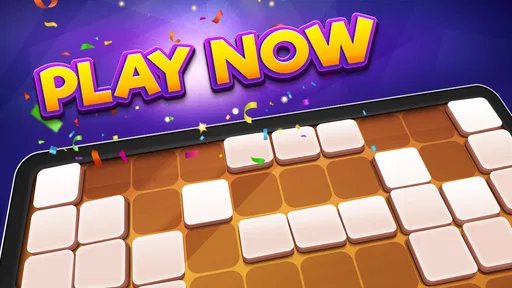
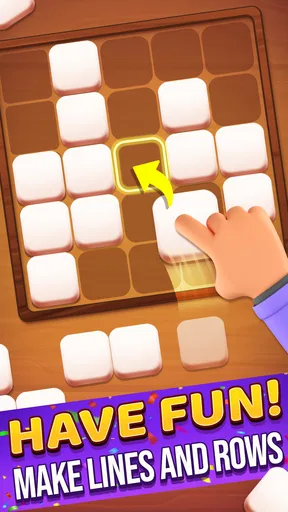
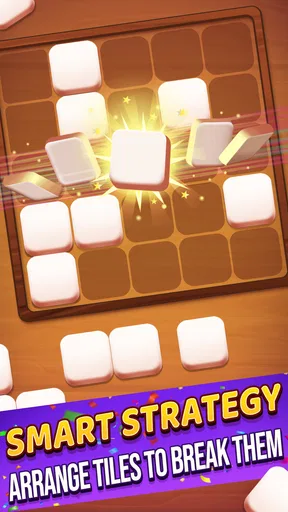

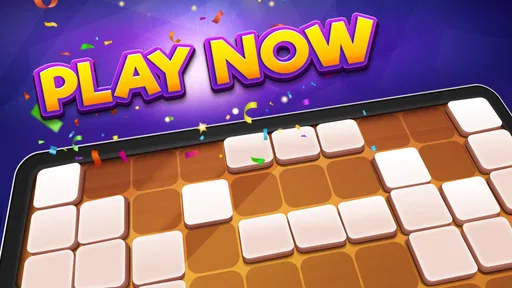
Our Review of Wooden Puzzle Bliss
 Analysis by Appyee
I approached Wooden Puzzle Bliss as a quiet, goal-focused puzzle game rather than a fast arcade distraction. The central idea is easy to understand: place matching blocks without filling the grid. That sounds simple, but the open spaces become increasingly important once several shapes are competing for room. I found the appeal in that small tension between making a move that works now and preserving enough flexibility for the next few moves.
Created by Gimica GmbH, this free puzzle game is aimed at Everyone and runs on Android 7.0 or later. Its store summary presents it as a way to train your brain, but I think its strongest use is more practical: it gives you short, self-contained moments of concentration when you want something calmer than a competitive game and more engaging than passive scrolling.
How the early goals establish the rhythm
The first useful goal is not a score or a dramatic reward. It is learning to read the board before touching it. Matching blocks is only half the job; the other half is protecting the empty area that lets later pieces fit. I quickly stopped treating each available move as an isolated opportunity and started looking for placements that kept several future options open.
That makes the opening experience approachable without making it completely mindless. A new player can understand what to do almost immediately, while someone who already knows block puzzles can begin experimenting with order and space management. The game’s wooden presentation supports that relaxed entry. It feels less visually aggressive than many bright, effects-heavy puzzle alternatives, so the act of planning remains the main event.
For an everyday example, I can see myself opening it while waiting for an appointment. I would play a few boards, pause when my name is called, and return later without needing to remember a story, a character build, or a complicated control scheme. That kind of interruption-friendly design is one of its practical strengths. The early objective is always visible in the board itself, which keeps the game easy to resume.
The first strategic lesson is worth taking seriously: do not rush to complete an obvious match if it leaves an awkward pocket elsewhere. A placement that looks efficient can make the remaining pieces impossible to organize. I found it more reliable to use the broadest open spaces first and reserve narrow gaps for shapes that clearly belong there. This is a small habit, but it changes the game from casual tapping into deliberate spatial reasoning.
Progress signals without unnecessary noise
Wooden Puzzle Bliss communicates progress mainly through the changing state of the puzzle in front of you. A clean placement, a completed area, and the gradual reduction of available room all act as immediate feedback. I appreciate that the board itself tells me whether I am playing well. I do not need a long explanation after every move to understand that I have created more room or made the next decision harder.
The lack of a heavy narrative layer also affects how progress feels. There is no story to follow between puzzles, so the satisfaction comes from improving my reading of shapes and space. That will be a positive choice for players who want a repeatable mental exercise. It may feel thin to anyone who expects characters, missions, or a large collection of unlockable content to provide motivation.
One useful way to measure personal progress is to watch how often you make a move simply because it is available. Early on, I tended to fill convenient spaces immediately. With more attention, I began delaying those placements and checking whether another block would use the same area more effectively. The game does not need to announce that improvement; the decisions themselves become more controlled.
The store listing shows an average rating of 4.6 from around 112 thousand ratings, with more than 9 thousand written reviews, and the game has passed 1 million installs. Those figures suggest that the straightforward format has found a substantial audience. They do not change my own experience, but they do fit the game’s broad accessibility: the rules are simple enough for a newcomer, while the board creates room for more thoughtful play.
There is also a useful distinction between visible progress and meaningful progress. Completing a puzzle feels good, but learning why a previous arrangement failed is more valuable over time. I recommend treating unsuccessful attempts as information about spacing rather than as wasted turns. That mindset makes the game less frustrating and helps keep the focus on improving decisions.
Where the difficulty curve feels fair
The challenge comes from the relationship between the blocks and the remaining grid, not from complicated controls. That is a good fit for a puzzle game designed around calm concentration. I never needed to fight the interface to think about the board. The difficult moments came from committing too early, overlooking a better order, or assuming that a large empty region would remain useful forever.
The most important difficulty shift is psychological. At first, an open grid feels generous. Later, every placement carries a cost because it removes flexibility. This creates a natural curve: the rules remain stable, but the consequences of a careless move become clearer. I prefer this kind of escalation to a sudden flood of new mechanics because it rewards attention rather than memorization.
My best practical tip is to scan the board in two passes. First, identify the spaces that are hardest to fill, such as corners or narrow edges. Then examine the available blocks and ask which one has the fewest sensible destinations. Placing that piece too late can close the only route it had. This approach is especially helpful when the board looks comfortable but the remaining shapes are unusually awkward.
A second tip is to avoid judging a move only by the amount of space it appears to clear. A large empty area is not automatically valuable if it is divided into disconnected pockets. I try to preserve connected, flexible space whenever possible. That gives later blocks more choices and makes recovery easier when my initial plan turns out to be wrong.
The game is therefore a good match for people who enjoy spatial puzzles without timers dominating every decision. Players looking for rapid reactions, constant novelty, or direct competition may find the pace too restrained. I also would not choose it for someone who needs a strong sense of destination, because the satisfaction is mostly in solving the current arrangement rather than pursuing a substantial external objective.
Challenge, unlocks, and the pace of returning
The retention appeal here is understated. I can understand why a player would return: the rules are immediately familiar, but a different arrangement can expose a new mistake in planning. That creates a modest “one more attempt” effect. I want to try again not because the game has overwhelmed me with spectacle, but because I can see a better decision I should have made.
That pacing works best in short sessions. I would use it during a commute, while taking a break from work, or at home when I want a puzzle that does not demand sound or a long uninterrupted commitment. The wooden look and measured format make it suitable for winding down, although players who prefer energetic feedback may find the presentation too quiet.
There is a trade-off in this restrained structure. Without a story campaign or a clearly emphasized long-term objective, the reason to keep playing depends heavily on whether you enjoy refining your own puzzle habits. For me, that is enough for occasional use and repeated short sessions. It is less convincing as a single game to occupy every evening, especially if I am in the mood for substantial progression or a changing set of activities.
The free price makes trying it easy, while optional in-app purchases range from $0.99 to $4.49 per item. I would begin without spending anything and first decide whether the basic loop genuinely fits my habits. That is particularly sensible here because the game’s value comes from the board-solving experience itself. A purchase should feel like a convenience or personal choice, not something required to understand why the game is enjoyable.
Another realistic question is whether it works for children. The Everyone content rating makes it broadly suitable from an age-classification perspective, and the matching rules are easy to explain. Still, I would present it as a thinking exercise rather than assume every child will enjoy it. Younger players may need help understanding why an apparently good placement can create a dead end, while adults may appreciate the same lesson as a gentle concentration break.
It is also worth knowing what kind of puzzle habit the game encourages. It rewards patience, visual scanning, and accepting that the best move may not be the most immediately satisfying one. If you prefer word puzzles, logic clues, or number-based deduction, this will not replace those experiences. Compared with a traditional match-three game, it feels less dependent on quick pattern recognition and more dependent on managing limited space. Compared with a jigsaw app, it offers more decision-making because each placement affects the future board.
Small frictions that affect the experience
The same simplicity that makes the game approachable can also limit its reach. There is not much here for players who need a rich sense of progression beyond solving one arrangement after another. If your ideal puzzle game includes a campaign, characters, elaborate goals, or a constantly changing rule set, this format may feel repetitive sooner than a more feature-heavy alternative.
The calm pace is another matter of taste. I like having time to inspect a board, but I know some players interpret that lack of urgency as a lack of excitement. The game is better suited to thoughtful pauses than to filling a few seconds with rapid stimulation. Choosing it over a timed puzzle means accepting that the reward comes from clarity and control rather than adrenaline.
I also found that the game asks me to supply some of my own motivation. The board gives immediate goals, but the larger reason to continue is personal: improving, relaxing, or completing another satisfying arrangement. That is not a flaw in a minimalist puzzle, but it is an important expectation to set. Players who rely on explicit unlocks and frequent rewards may not feel the same pull.
For a more effective session, I would avoid playing while distracted by a conversation or a demanding task. The controls may be simple, but the decisions are easy to spoil when I am only half-looking. If I make a poor placement, I prefer to pause and inspect the remaining space rather than repeatedly tap at random. The game rewards a few seconds of attention more than a long period of unfocused play.
Another useful routine is to stop after a particularly frustrating board instead of forcing endless retries. Returning later can make the shape relationships easier to see. This is not a game where grinding automatically solves the problem; a fresh perspective is often more helpful than repeating the same instinctive move. That makes it a surprisingly good companion for short breaks, provided I treat it as a reset rather than another source of pressure.
My progression verdict
As a puzzle game, Wooden Puzzle Bliss succeeds because its central decision stays readable while gaining depth through limited space. The early goal is clear, the progress signal is visible in the board, and the challenge grows through better planning rather than a pile of unexplained systems. I found that structure satisfying when I wanted something quiet but still mentally active.
Its strongest audience is someone who enjoys block placement, prefers unhurried problem-solving, and is happy to create their own reason to improve. It is also a sensible free download for anyone who wants a compact game for waiting rooms, breaks, or evening decompression. The Everyone rating and support for Android 7.0 or later make it accessible to a broad range of Android users.
I would skip it if my priority were a story-driven journey, competitive rankings, constant unlocks, or a fast stream of new mechanics. A more elaborate puzzle alternative will offer stronger long-term structure in those cases. I would also avoid expecting every session to feel fresh simply because the board changes; the underlying activity remains focused on the same spatial trade-offs.
The current version is 1.13.0, and the game has been available since June 28, 2022. Those details matter less to me than the consistency of the core experience: place carefully, preserve room, and learn from the board before it closes in. After spending time with it, my recommendation is positive but specific. Choose it for calm, repeatable spatial thinking, not for a content-heavy progression adventure.
In the end, I see it as a dependable small puzzle rather than an all-purpose mobile game. Its best moments arrive when I notice that the obvious move is not the intelligent one, rethink the order of the blocks, and finish with space to spare. That modest sense of control is exactly why I would recommend giving it a try, especially if you want a free game that can occupy a few minutes without demanding your full day.
Verdict
Strengths of Wooden Puzzle Bliss
- Simple drag-and-drop controls make it easy to start playing.
- Relaxing gameplay is suitable for short breaks or casual sessions.
- Wooden-style visuals create a warm, calming presentation.
- Offline play is useful when you have no internet connection.
- Gradually harder puzzles can provide a satisfying sense of progress.
Limitations of Wooden Puzzle Bliss
- Some levels may feel repetitive after extended play.
- Hints or extra assistance may be limited in difficult puzzles.
- The relaxed pace may not appeal to players seeking fast action.
- Ads may interrupt gameplay, depending on the app version.
- Small pieces can be harder to position accurately on compact screens.
Other Releases by Gimica GmbH
View All


Similar Picks in This Category
View All
Block Blast!
HungryStudio4.8

Braindom: Brain Games Test
Lahana Game Studio4.6

AMAZE!
CrazyLabs LTD4.6

Sudoku - Classic Sudoku Puzzle
Oakever Games4.7

Art Puzzle - Puzzle Games
Easybrain4.8

Amaze GO!
Oakever Games4.9
Frequently Asked Questions
What is Wooden Puzzle Bliss?
Wooden Puzzle Bliss is a relaxing puzzle game centered on the look and feel of classic wooden brain teasers. Players generally solve shape-fitting, arranging, or logic-based challenges by placing pieces in the correct positions. Its calm presentation makes it suitable for short breaks, while progressively harder levels can provide a more demanding experience for users who enjoy thoughtful, unhurried gameplay.
Is Wooden Puzzle Bliss suitable for children and beginners?
The game is generally approachable for beginners because its core mechanics are easy to understand and do not require fast reflexes. However, some puzzles may become challenging as you progress, so younger children might need occasional help. Parents should also review the app’s age rating, advertising, in-app purchase information, and privacy details before allowing a child to play.
Does Wooden Puzzle Bliss work without an internet connection?
Many puzzle games of this type allow at least part of the gameplay to continue offline, which is convenient when traveling or when mobile data is unavailable. Nevertheless, features such as advertisements, cloud synchronization, updates, leaderboards, or purchases may require an internet connection. It is best to test the game in airplane mode after installation rather than assuming every feature works offline.
Are there advertisements or in-app purchases in Wooden Puzzle Bliss?
The availability of advertising and optional purchases can depend on the version of Wooden Puzzle Bliss and the platform where it is downloaded. Free versions may display ads between levels or offer purchases for removing advertising, unlocking content, or obtaining hints. Before downloading, check the official store listing and purchase settings, especially if children will use the device.
Is Wooden Puzzle Bliss worth downloading?
Wooden Puzzle Bliss is worth considering if you enjoy calm, tactile-looking puzzle games that can be played at your own pace. It may appeal to users seeking a relaxing alternative to action-heavy mobile titles, although the experience can feel repetitive if you prefer constant variety or complex story content. Review the screenshots, permissions, ratings, and latest update information before installing.
Play our best games!


